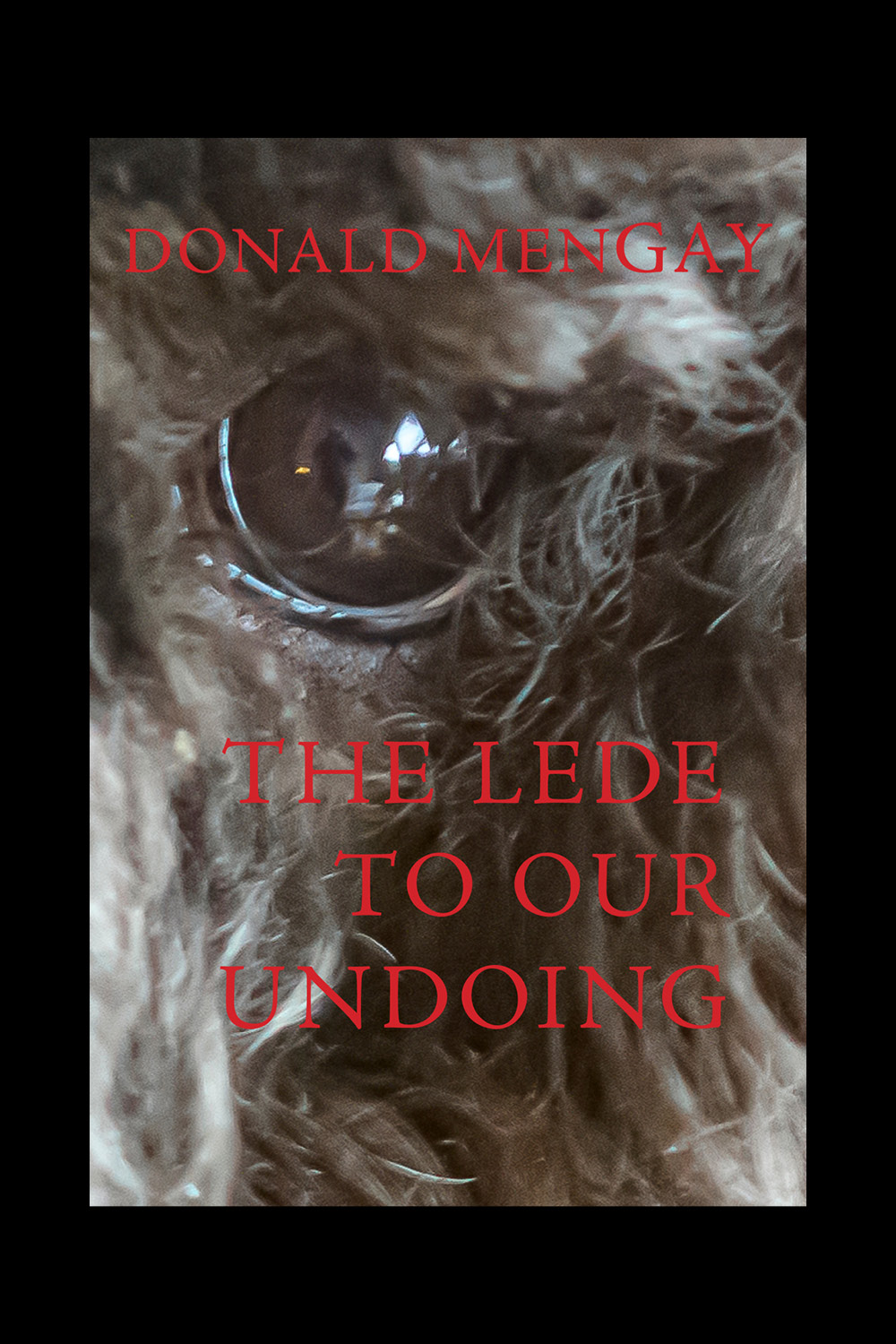
The Lede to Our Undoing
The Lede to Our Undoing

ISBN 9781736525890 2023 $25 Kindle $9.99
DESCRIPTION
1970s rust-belt America. The era of civil rights, women's rights, and gay rights, as well as the birth of the environmental movement. Twins Jake and Wren are raised in the white-flight suburb of Laurentine, not far from an industrial city ironically named the Forest City. The twin's parents, Harry and Florrie, do their best to keep their offspring on the straight and narrow, according to principles common today in MAGA America, before it got the name. But the two are not good at coloring inside the lines. Wren falls in love with an African-American youth named Donald, and Jake falls in love first with Romeo and then Peacoat--with traumatic results. Their story is told by the family mutt, Molly, whose outsider status offers the reader a unique view on human culture.
REVIEWS
"A triumph." —Kirkus Reviews
"The novel’s ambitious language, perspective, and narrative approach leaves it to readers to chart the relationships between characters based on Molly’s observations, as they’re never explicitly outlined in a traditional way. Readers who appreciate that kind of literary challenge will find much depth, feeling, and startling insights here, as Molly watches Jake grow and change after the “loss of Romeo-heaven” and other heartbreaks. Also arresting: Molly’s vivid, incisive surveying of the upper midwest, from lakes to teen culture to factories that “shoot sparks and rain debris that mixes with snow, the tyranny of whiteness starting to obliterate everything.” Often beautiful, always surprising, Molly’s storytelling makes the familiar feel fresh." —Booklife
"Mengay's narrative driven storytelling style raises to a level of literary excellence that is unreservedly recommended for both personal reading lists and community/ academic library General Fiction collections. The Lede To Our Undoing is one of those novels that will linger in the mind and memory long after the book has been finished and set back upon the shelf." —The Midwest Review of Books
"Set in the Midwest-end of the Rust Belt, the story resonates beyond geography, as do its characters, whose see-saw lives of economic downsizing and religious uplifting are generously rendered in language attuned to the reality and poetry of lived experience. If this sounds all too human, Mengay troubles that too with a canny narrator whose roving eye doesn’t miss a thing. We’ve not seen ourselves in fiction in the way Molly sees us." —Rick Rodriguez, author of Immunity's Sovereignty
"With a memorable cast of characters trying to navigate youthful rebellion, sexual identity, drug exploration, as well as an extremely unusual but uniquely articulate narrator, Mengay recreates for the reader the experience of leaving home as a young adult. His band of vagabonds support one another, fight occasionally, love even more, and embody the need so many young Americans had—and have—to escape from their family and community, even though they may not know how on earth to do that. The realistic dialogue balances delicately with the poetic narrative commentary upon the experience of this unique yet universal band of travelers. Donald Mengay has written a Bildungsroman that is moving, funny, and utterly memorable.” —Victoria Amador, author of The Gothic Portal and Olivia de Havilland: Lady Triumphant
ISBN 9781736525890 2023 $25 Kindle $9.99